WildCraft: Animal Sim Online
- 4.5
- Rating
- 100.00M
- Installs
- Free
- Price
 Analysis by App-foxy
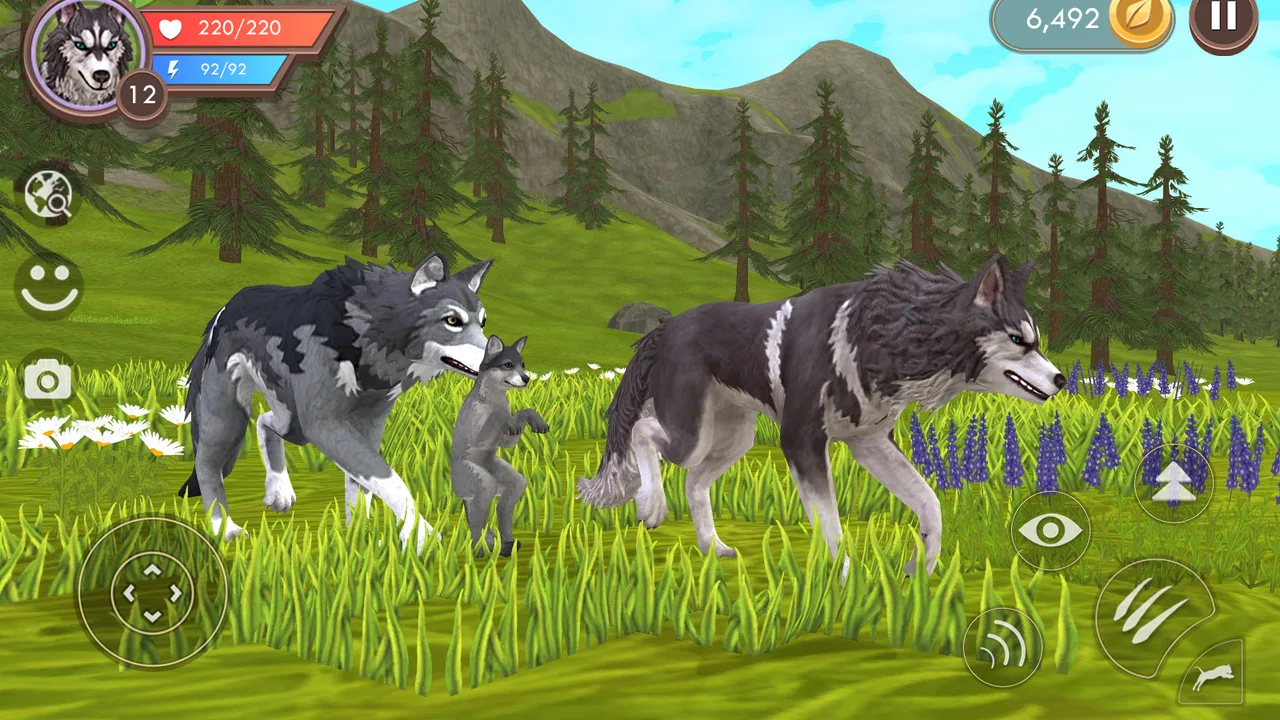
WildCraft: Animal Sim Online is a free simulation game from Turbo Rocket Games that puts me in control of a wild animal rather than a human character. The central appeal is simple but more meaningful than the short store description suggests: I get to experience the world through animals such as wolves, lynxes, tigers, bears, horses and others, then decide how I want to spend time in that world. I can explore, develop a character and share the experience online, but the game’s real strength is the feeling of inhabiting an animal instead of merely using one as decoration.
That distinction matters if you are choosing between this and a conventional action game. WildCraft is not built around constant shooting, racing or solving a tightly scripted campaign. It is a slower, more personal kind of animal simulation, and I found it most enjoyable when I treated it as a relaxing world to return to rather than a game I had to rush through. It is free to start, rated for Everyone 10+, and compatible with devices running Android 6.0 or later. Its 4.5 average from around 1.2 million ratings and more than 100 million installs also show how broad its audience has become.
Living through an animal changes the way the game feels
The capability I kept coming back to is the choice to play as different wild animals. In many games, selecting a wolf or tiger is mainly a cosmetic decision: the model changes, while the basic experience stays identical. Here, the animal identity is the point of the game. Moving through the environment as a creature makes ordinary travel feel like part of the role, and it encourages me to pay attention to the surroundings instead of treating the map as a corridor between objectives.
You May Also Like

 AccuWeather: Weather Radar
AccuWeather Review: A Quick, Clear Forecast for Everyday Decisions
For everyday plans, the best forecast is the one you can understand quickly. AccuWeather makes rain timing, radar, and local conditions easy to act on, with a few trade-offs.

 Hill Climb Racing
Why Hill Climb Racing Still Turns Crashes Into One More Run
A tiny car, a bumpy hill and one more upgrade: Hill Climb Racing keeps resurfacing because its simple chaos makes every near-miss feel personal.

 AliExpress - Shopping App
AliExpress Makes Global Shopping Feel Personal, but Shoppers Bear the Risk
AliExpress turns a global marketplace into a pocket-sized discovery engine. Its reach is useful, its shopping loop compelling, and its trade-offs easy to miss.

 Lords Mobile: Kingdom Wars
Lords Mobile Is a Kingdom-Building Routine, Not a Quick Match
A case-by-case verdict on the building, battles, device demands, and social commitments that make Lords Mobile rewarding for some players and exhausting for others.

 PDF Scanner app - TapScanner
TapScanner Makes Paperwork Easier to Capture, Check, and Share
TapScanner makes scanning with a phone feel less like a rescue operation and more like a dependable step in getting work done. Its capture tools are useful, though not flawless.

 Block Blast!
 Shows How Much a Puzzle Game Can Leave Out
A quiet grid game shows why puzzle players increasingly value instant clarity, repeatable skill and low-pressure play—and where the genre still needs to catch up.
More From Our News Desk
View All News


I especially like how this design creates different moods. A wolf suggests a social, roaming experience, while a tiger or bear gives the world a heavier, more imposing presence. A horse changes the fantasy again, making the experience feel less like surviving in the wilderness and more like moving freely through it. I would not claim that every animal creates a completely separate game, but the selection gives me useful reasons to change how I play and prevents the experience from becoming tied to one character.
The animal perspective also makes the game approachable for younger players and for anyone who prefers imaginative play over complex controls. The age rating of Everyone 10+ is a useful guide here: this is a game with a family-friendly presentation, but it still presents a wild setting and online interaction, so parents may want to decide whether those elements suit a particular child. For me, the tone is more playful and exploratory than harsh or frightening.
What makes this capability valuable is not simply the number of animals available. It is the way the choice gives my sessions a clear identity. When I log in with a particular animal, I already have a loose role in mind. I may want to wander, develop that character, meet other players or simply look around. That small sense of intention is what keeps the game from feeling like an empty collection of animal skins.
What the animal choice means during an ordinary session
In practice, I do not approach WildCraft like a checklist that must be completed as quickly as possible. I choose an animal according to the kind of session I want. If I have only a few minutes, I can use the time for a short exploration session or work on my current character. If I have longer, I can settle into the setting and let the online side become part of the visit.
A realistic everyday example is playing after work when I want something active but not demanding. I might begin with a wolf, roam through the environment and spend time improving that character. If a friend is available, the online setting gives the session a shared purpose without requiring us to coordinate around a complicated story. If I am tired, I can still enjoy the animal role and scenery without needing the concentration demanded by a competitive shooter or a strategy game.
This is also where the game differs from many traditional simulation alternatives. A city-building simulator asks me to manage systems, while a farming game usually rewards routine planning and resource cycles. WildCraft is more immediate and embodied: I am not managing an animal from above; I am moving as that animal. Compared with a standard open-world action game, it is less focused on missions and spectacle, but it gives the animal theme far more room to shape the experience.
That makes the game a good fit for players who enjoy role-playing through movement and choice. I can make a session feel different without needing a major story event. Changing the animal, changing my pace and deciding whether to play alone or with others are small choices, but together they provide enough variety for casual use.
Online play works best when it supports the animal fantasy
The online element is most effective when I use it to make the world feel shared rather than turning every session into a competition. Playing with others can make exploration feel less solitary, and it gives the animal setting a social dimension that a purely offline simulation would not have. I find that this works particularly well with friends who enjoy creating their own stories around the animals instead of looking for a strict objective every minute.
There is a practical trade-off, though. Online play depends on the quality of the session around me: the people I play with, the stability of the connection and how much cooperation everyone wants. If I am expecting a carefully structured multiplayer campaign, WildCraft may feel loose. Its appeal is the shared world and the freedom to inhabit an animal, not the precision of a competitive team game.
For a younger player, I would treat the online option as something to discuss before handing over the device. The game’s family-friendly age category does not mean every online interaction will match a parent’s preferences. That is not a criticism unique to this title, but it is important when the multiplayer element is one of the reasons to install it.
Progress feels more personal when I avoid rushing it
One of my more useful discoveries was that the game is easier to enjoy when I focus on one animal for a while instead of constantly switching. Trying every option immediately is tempting, but it can make the experience feel shallow because I never develop a relationship with a particular character. Staying with one animal gives exploration and progression more continuity, then switching later feels like a genuine change of play style.
I also recommend deciding what you want from a session before opening the game. If the goal is relaxation, I can explore without turning every moment into a race. If I want a clearer sense of progress, I can concentrate on developing the animal I have already chosen. This simple approach helps because the game offers a broad fantasy rather than forcing one narrow route through its content.
Another practical tip is to treat the different animals as tools for changing the mood of play, not as a promise that each one will deliver a completely different ruleset. That expectation keeps the variety enjoyable without making me disappointed when the underlying simulation remains familiar. The choice is strongest as a role-playing and atmosphere feature.
The main trade-off is freedom versus direction
WildCraft’s open animal-focused design is also its clearest limitation. Players who need a strong sequence of missions, constant rewards or a clearly marked long-term objective may find the experience too loose. I sometimes wanted a stronger push telling me what to do next, especially when I had already explored the setting and was looking for a fresh reason to continue.
This is where I would choose another game instead. If you want deep management, a detailed economy or a tightly written campaign, a conventional simulation or role-playing game will probably serve you better. If you want fast competitive matches, WildCraft is also not the obvious choice. Its best moments come from inhabiting the world, not from demanding perfect reactions or building an elaborate empire.
There is also a financial consideration. The game is free to download, but optional in-app purchases range from $0.99 to $99.99 per item. I can begin without paying, which makes it easy to test whether the animal-simulation style suits me. Still, anyone sensitive to purchase prompts should approach the free model carefully, particularly when a child is using the device. I would decide on a spending boundary before playing rather than making that decision in the middle of an enthusiastic session.
The large install base and high volume of ratings make the game easy to discover, but popularity does not remove the need to check whether the style matches your expectations. A widely played game can still be the wrong fit for someone who wants a focused narrative or a completely offline experience. I see WildCraft as a specific kind of entertainment, not a universal replacement for every simulation game.
Who gets the most from this animal simulation?
I would recommend it first to players who enjoy animals, exploration and light role-playing. It is particularly suitable for someone who likes the idea of choosing a creature and gradually making that character feel like their own. The online setting adds value for friends who want a relaxed shared activity rather than a highly competitive match.
It is also a strong option for families looking for a game with an accessible premise and a softer presentation. The controls and concept are easier to understand than a complex management simulator, while the animal perspective gives younger players something imaginative to engage with. I would still keep the Everyone 10+ rating in mind and talk through online play and purchases before letting a child play independently.
On the other hand, I would tell impatient players to try it with modest expectations. If you need immediate intensity, a constant stream of objectives or a deep simulation of animal biology, this may not satisfy you. The game’s animals are the doorway into the experience, but the broader structure remains designed for casual exploration and ongoing character play rather than scientific realism.
Device compatibility is straightforward for older Android hardware because the minimum requirement is Android 6.0. That does not guarantee identical performance on every phone, so I would still judge the experience on the device itself, especially if online play is important. The game’s broad availability makes it convenient to try, but convenience should not be confused with a promise that every device will feel equally smooth.
My recommendation after spending time with it
The best reason to play WildCraft is the animal perspective, not the size of its audience. Turbo Rocket Games has built a simulation that understands why many people want to play as a wolf, tiger, bear or another creature: the fantasy changes the meaning of simply moving through a world. That idea gives the game a calmer and more personal identity than many action-focused alternatives.
I would install it if I wanted a free game for short relaxing sessions, animal-themed exploration or casual online time with friends. I would skip it if my priority were a demanding competitive system, a detailed management model or a strongly guided story. The free entry point makes testing easy, while the optional purchases mean I would keep spending under control from the start.
After trying different ways to play, my advice is to choose one animal, give yourself a clear reason for each session and let the world unfold at its own pace. That approach brings out what the game does well and avoids treating it like something it was never designed to be. For the right player, WildCraft: Animal Sim Online is a welcoming way to turn animal curiosity into a playable routine; for everyone else, its relaxed freedom may feel more like a lack of direction.
FAQs for WildCraft: Animal Sim Online
01What is the main objective of WildCraft: Animal Sim Online?
WildCraft: Animal Sim Online allows players to explore a vast open world as wild animals. The primary objective is to survive, grow, and build a family in a realistic wilderness environment. Players can choose different animals, complete quests, and interact with other players, making it an engaging multiplayer experience.
02Can WildCraft: Animal Sim Online be played offline?
WildCraft: Animal Sim Online primarily focuses on multiplayer gameplay, meaning an internet connection is required for most features. However, players can explore the single-player mode offline, though this limits interaction with other players and certain online-exclusive events and features.
03Are there in-app purchases in WildCraft: Animal Sim Online?
Yes, WildCraft features in-app purchases. These allow players to buy various items, such as skins, boosts, and additional animals. While the game is free to play, these purchases can enhance the gaming experience by speeding up progress or providing unique customization options.
04How does character progression work in WildCraft: Animal Sim Online?
Character progression in WildCraft involves leveling up your animal by completing quests and participating in battles. As you gain experience, you can unlock new abilities, animals, and skins. Building a family and raising offspring is also a key element, adding depth to the gameplay.
05Is WildCraft: Animal Sim Online suitable for children?
WildCraft is generally suitable for children, featuring an age-appropriate environment with moderate fantasy violence. Parents should be aware of the multiplayer aspect, which allows interaction with others. The game offers parental controls to manage chat and other interactions, ensuring a safer experience for younger players.
Pros
- Immersive 3D graphics and environments.
- Wide variety of animals to choose from.
- Exciting multiplayer mode available.
- Customizable animal characters.
- Regular updates with new features.
Cons
- In-app purchases can be expensive.
- Requires a stable internet connection.
- Some players report occasional lag.
- Limited offline play options.
- Ads can be intrusive at times.

WildCraft: Animal Sim Online
Gallery